
// Anna University, Chennai / 2024
Anna University — Electromagnetic Fields (EC3452), April/May 2024
Electromagnetic Fields · EC3452 · R2021 · B.E./B.Tech. Engineering (common paper) · Semester 4
Files open in a new tab. Use your browser's download or save option to keep a copy.
Work through the questions
16 questions
No verified answers are available for this paper.
Transform the vector Q⃗ = [√(x² + y²)/√(x² + y² + z²)] a_x − [yz/√(x² + y² + z²)] a_z to cylindrical and spherical coordinates.
No verified answer or solution is available for this question.
Define the divergence theorem and stokes theorem.
No verified answer or solution is available for this question.
Two point charges with q₁ = 2×10⁻⁶ and q₂ = −4x×10⁻⁵C are located in free space at (1, 3, −1) and (−3, 1, −2) respectively, in a Cartesian Coordinate system. Find the electric field E⃗ at (3, 1, −2) and the force of an 8×10⁻⁵C charge located at that point. All distances are in metres.
No verified answer or solution is available for this question.
Justify the statement, “Total electrostatic field of any closed loop is zero”.
No verified answer or solution is available for this question.
Predict the direction of the magnetic field, when current is passing from point A to B (y direction).
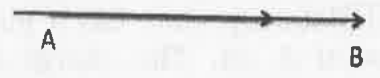
Q5 - straight conductor carrying current from A to B No verified answer or solution is available for this question.
A current loop experiences a torque in a magnetic field. Justify that the force exerted on the whole loop is zero.
No verified answer or solution is available for this question.
Recall the four Maxwell equations for time-varying fields.
No verified answer or solution is available for this question.
How to overcome the inconsistency of Ampere's law in the time-varying field?
No verified answer or solution is available for this question.
Rearrange the Poynting vector, when the wave is propagated through a pure dielectric medium.
No verified answer or solution is available for this question.
A plane wave propagating through a dielectric medium with ε_r = 8, μ_r = 2 and E = 0.5e^(−z/3) sin(10⁸t − βz)a_y V/m. Find the phase constant and skin depth.
No verified answer or solution is available for this question.
(a) (i) Analyze the Gradient of scalar and divergence and curl of the vector. (6) (ii) Find the gradient of the scalar fields U = x²y + xyz and U = e^(−z) sin 2x cos y. (7) (OR) (b) (i) Convert points P(1, 3, 5) and T(0, −4, 3) from Cartesian to cylindrical and Spherical coordinates. (6) (ii) Compute the divergence and curl of the vector field A = yz a_x + 4xy a_y + y a_z and evaluate it at the point (1, −2, 3). (7)
No verified answer or solution is available for this question.
(a) (i) If D = (2y² + z)a_x + 4xy a_y + xa_z C/m², find (7) (1) The volume charge density is at (−1, 0, 3). (2) The flux through the cube is defined by 0 ≤ x ≤ 1, 0 ≤ y ≤ 1, 0 ≤ z ≤ 1. (3) The cube encloses the total charge. (ii) Rearrange Gauss's law and develop Laplace's and Poisson's equations. (6) (OR) (b) (i) Interpret the Electric Flux density for a uniformly charged sphere of radius 'a'. Construct a Gaussian surface for the case r ≥ a and r ≤ a separately. (6) (ii) A parallel-plate capacitor has a plate area of 200 m² and a plate separation of 3 cm. The charge density is with air dielectric. Determine (1) The capacitance of the capacitor. (4) (2) The voltage between the plates (3)
No verified answer or solution is available for this question.
(a) Prove that total magnetic field intensity (H) outside of the outer coaxial conductor is zero for infinitely long coaxial transmission line using Amperes law. Determine H at each Amperian path. (13) (OR) (b) Determine the Magnetic field and current distributions for the following three conditions (i) Infinite line current along the z-axis (4) (ii) Infinite sheet of current (4) (iii) Infinitely long coaxial transmission line (5)
No verified answer or solution is available for this question.
(a) (i) A thin ring of radius 5 cm is placed on plane z = 1 cm so that its center is at (0, 0, 1)cm. If the ring carries 50 mA a_φ, find H at (0, 0, −1)cm and (0, 0, 10)cm. (7) (ii) Prove that Maxwell's equations are related to time-varying magnetic fields. (6) (OR) (b) (i) Reconstruct Ampere's circuit law for time-varying situations to satisfy Faraday's law. (7) (ii) Derive the Helmholtz's wave equations for both E and H fields. (6)
No verified answer or solution is available for this question.
(a) Conclude that the tangential components of H⃗ are discontinuous across the boundary, and the normal components of H⃗ are continuous across the dielectric-dielectric boundary medium. Besides, determine H⃗'s tangential and normal components across the dielectric-conductor boundary medium. (13) (OR) (b) (i) A uniform plane wave propagating in a lossless medium has E⃗ = 2 sin[10⁸t − βz]a_y V/m. If ε_r = 1, μ_r = 2 and σ = −3V/m, characterize the medium. Compute the ηβ and H. (7) (ii) If the wave encounters a perfectly conducting plate normal to the z-axis at z = 0, find the reflected wave E_r and H_r. (6)
No verified answer or solution is available for this question.
(a) Develop the transmission and reflection coefficient expression when the incident wave from medium 2 propagates to medium 1 in normal incidence. Assume Medium 2 is air and medium 1 is Polyethylene with ε_r = 2.25; μ_r = 1. (15) (OR) (b) Discuss the variation of flux with time in the following three ways: (i) A stationary loop in a time-varying magnetic field (Transformer emf) (5) (ii) A time-varying loop in a static magnetic field(Motional emf) (5) (iii) A time-varying loop in a time-varying magnetic field (5)
No verified answer or solution is available for this question.