
// Anna University, Chennai / 2019
Anna University — Basic Electrical, Electronics and Measurement Engineering (BE8255), November/December 2019
Basic Electrical, Electronics and Measurement Engineering · BE8255 · R2017 · B.E./B.Tech. Engineering (common paper) · Semester 2
Files open in a new tab. Use your browser's download or save option to keep a copy.
Work through the questions
16 questions
No verified answers are available for this paper.
Basic Electrical, Electronics and Measurement Engineering
The resistance of two wires is 25 Ω when connected in series and 6 Ω when connected in parallel. Calculate the resistance of each wire.
No verified answer or solution is available for this question.
Basic Electrical, Electronics and Measurement Engineering
Calculate the value of Norton’s current (Iₙ) for the circuit shown in Figure 2.
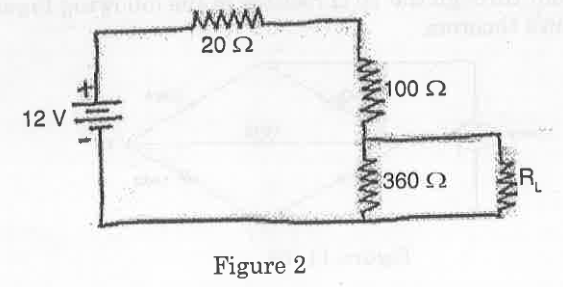
Figure 2 No verified answer or solution is available for this question.
Basic Electrical, Electronics and Measurement Engineering
State double revolving field theory.
No verified answer or solution is available for this question.
Basic Electrical, Electronics and Measurement Engineering
Why an induction motor is called a ‘rotating transformer’?
No verified answer or solution is available for this question.
Basic Electrical, Electronics and Measurement Engineering
Mention the types of energy tariff for domestic loads.
No verified answer or solution is available for this question.
Basic Electrical, Electronics and Measurement Engineering
Write the most commonly used materials for fuse element.
No verified answer or solution is available for this question.
Basic Electrical, Electronics and Measurement Engineering
What is diffusion current?
No verified answer or solution is available for this question.
Basic Electrical, Electronics and Measurement Engineering
When should a transistor be biased? Name two common biasing circuits.
No verified answer or solution is available for this question.
Basic Electrical, Electronics and Measurement Engineering
Define reproducibility.
No verified answer or solution is available for this question.
Basic Electrical, Electronics and Measurement Engineering
What causes errors in moving iron instruments?
No verified answer or solution is available for this question.
Basic Electrical, Electronics and Measurement Engineering
(a) For the circuit shown in Figure 11(a), find the (i) currents in different branches (ii) current supplied by the battery (iii) potential difference between the terminals A and B. (OR) (b) Find the current through the 10 Ω resistor in Figure 11(b) using Thevenin’s theorem.
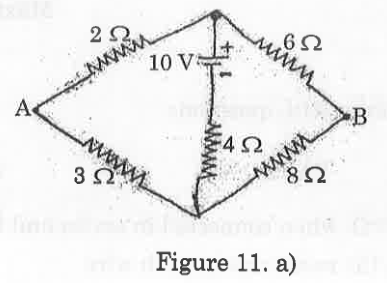
Figure 11(a) 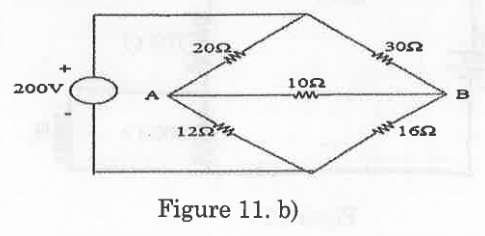
Figure 11(b) No verified answer or solution is available for this question.
Basic Electrical, Electronics and Measurement Engineering
(a) Explain the principle of operation of a transformer. Derive its EMF equation. (OR) (b) Describe the construction and principle of operation of stepper motor.
No verified answer or solution is available for this question.
Basic Electrical, Electronics and Measurement Engineering
(a) Define Betz limit. Explain the characteristics of wind power. (OR) (b) Discuss the advantages and disadvantages of concentrating collectors over a flat plate solar collector.
No verified answer or solution is available for this question.
Basic Electrical, Electronics and Measurement Engineering
(a) Describe the working of a PN junction diode with neat diagram. Also explain its V-I characteristics. (OR) (b) Explain with a neat diagram about Hartley oscillator and derive the expression for frequency of oscillation and the necessary conditions for oscillation.
No verified answer or solution is available for this question.
Basic Electrical, Electronics and Measurement Engineering
(a) Describe briefly with a neat diagram, the working of piezoelectric transducer. (OR) (b) Explain with neat diagram, the construction and working principle of LVDT.
No verified answer or solution is available for this question.
Basic Electrical, Electronics and Measurement Engineering
(a) Find the voltage across 5 Ω resistor for the circuit shown in Figure 16(a) using source transformation technique and verify the results using mesh analysis. (OR) (b) (i) Calculate the current in the 4 Ω resistor in Figure 16(b)(i) using superposition theorem. (7 marks) (ii) In the circuit shown in Figure 16(b)(ii), find the value of R for maximum power transfer. Also calculate the maximum power. (8 marks)
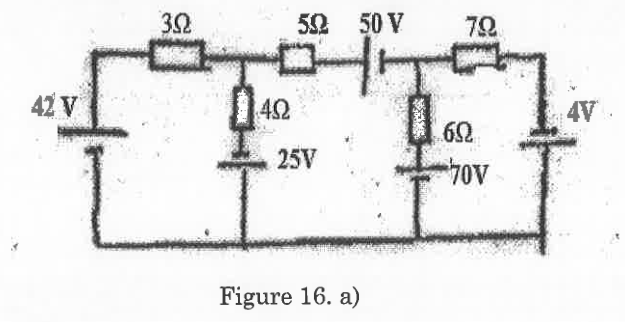
Figure 16(a) 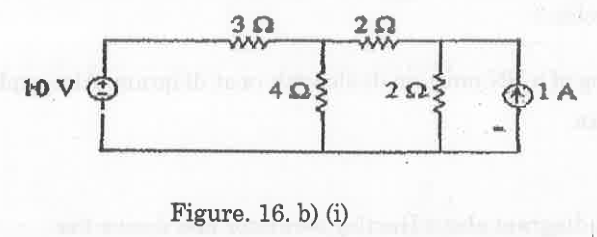
Figure 16(b)(i) 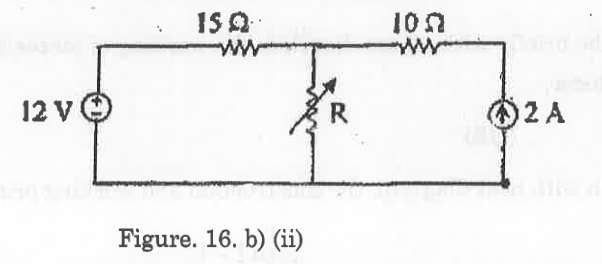
Figure 16(b)(ii) No verified answer or solution is available for this question.