
// Anna University, Chennai / 2022
Anna University — Basic Electrical, Electronics and Measurement Engineering (BE8255), April/May 2022
Basic Electrical, Electronics and Measurement Engineering · BE8255 · R2017 · B.E./B.Tech. Engineering (common paper) · Semester 2
Files open in a new tab. Use your browser's download or save option to keep a copy.
Work through the questions
16 questions
No verified answers are available for this paper.
Basic Electrical, Electronics and Measurement Engineering
Define maximum power transfer theorem.
No verified answer or solution is available for this question.
Basic Electrical, Electronics and Measurement Engineering
- 2022
- 2019
Also asked in AKTU B.Tech — Basic Electrical Engineering (KEE101), Semester 1, 2022 (2022), AKTU B.Tech — Basic Electrical Engineering (KEE101T), Semester 1, 2022 (2022), Anna University — Basic Electrical and Instrumentation Engineering (BE8254), April/May 2019 (2019).
Define power factor.
No verified answer or solution is available for this question.
Basic Electrical, Electronics and Measurement Engineering
Classify the different types of DC generators.
No verified answer or solution is available for this question.
Basic Electrical, Electronics and Measurement Engineering
What is the difference between distribution transformer and power transformer?
No verified answer or solution is available for this question.
Basic Electrical, Electronics and Measurement Engineering
What are is the significance of earthing in electrical installations?
No verified answer or solution is available for this question.
Basic Electrical, Electronics and Measurement Engineering
Compare NiCd and Li ion batteries.
No verified answer or solution is available for this question.
Basic Electrical, Electronics and Measurement Engineering
Draw the V-I characteristics of diode and Zener diode.
No verified answer or solution is available for this question.
Basic Electrical, Electronics and Measurement Engineering
Mention the applications 555 timer.
No verified answer or solution is available for this question.
Basic Electrical, Electronics and Measurement Engineering
What are the types of error that can occur in electrical measurements?
No verified answer or solution is available for this question.
Basic Electrical, Electronics and Measurement Engineering
Distinguish between energy meter and watt meter.
No verified answer or solution is available for this question.
Basic Electrical, Electronics and Measurement Engineering
(a) (i) Find the current through R3 resistor shown in Figure 1. (6 marks) (ii) Deduce the equivalent impedance across terminals A and B in Figure 2. (7 marks) (OR) (b) Deduce the voltage, current and power expression for a star connected system.
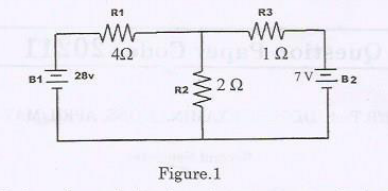
Figure 1 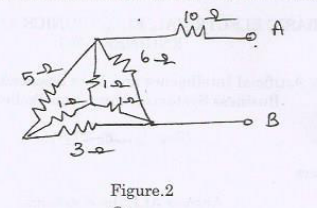
Figure 2 No verified answer or solution is available for this question.
Basic Electrical, Electronics and Measurement Engineering
(a) Draw the cross sectional view of DC machine and explain the principle and operation of DC generator and DC motor. (OR) (b) (i) Derive the emf equation of transformer. (6 marks) (ii) Explain the construction and working principle of stepper motor. (7 marks)
No verified answer or solution is available for this question.
Basic Electrical, Electronics and Measurement Engineering
(a) With the help of a block diagram explain the working principle of (i) refrigerator (7 marks) (ii) air conditioner. (6 marks) (OR) (b) Explain construction and working principle of (i) sodium vapour lamp (6 marks) and (ii) fluorescent tube. (7 marks)
No verified answer or solution is available for this question.
Basic Electrical, Electronics and Measurement Engineering
(a) Explain the principle of operation of successive approximation A/D converter. (OR) (b) (i) Explain the how integration can be done by OP Amp? (6 marks) (ii) Explain the working of voltage regulator employing IC LM723. (7 marks)
No verified answer or solution is available for this question.
Basic Electrical, Electronics and Measurement Engineering
(a) Explain the principle of operation, merits and demits of moving coil instruments. (OR) (b) Briefly explain the construction and working principle of CRO.
No verified answer or solution is available for this question.
Basic Electrical, Electronics and Measurement Engineering
(a) (i) Deduce the Thevenin equivalent of the circuit across terminals AB in Figure 3. (7 marks) (ii) By employing superposition theorem find the current through [target component unspecified in the printed paper; see Figure 4]. (8 marks) (OR) (b) (i) Determine the Norton’s equivalent across terminal A and B. (7 marks) (ii) Determine Thevenin’s equivalent across terminal A and B. (8 marks)
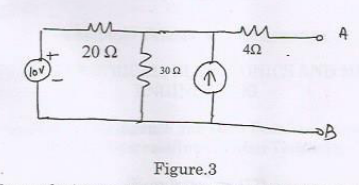
Figure 3 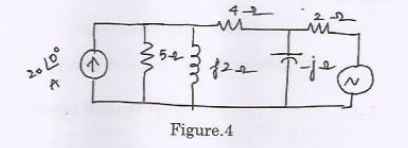
Figure 4 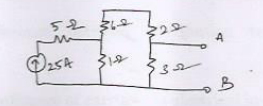
Q16(b)(i) circuit 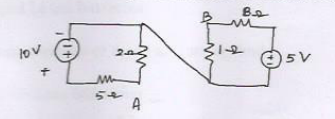
Q16(b)(ii) circuit No verified answer or solution is available for this question.