
// Anna University, Chennai / 2023
Anna University — Basic Electrical and Electronics Engineering (BE3251), April/May 2023
Basic Electrical and Electronics Engineering · BE3251 · R2021 · B.E./B.Tech. Engineering (common paper) · Semester 2
Files open in a new tab. Use your browser's download or save option to keep a copy.
Work through the questions
16 questions
No verified answers are available for this paper.
Basic Electrical and Electronics Engineering
State Ohm’s law and mention its limitations.
No verified answer or solution is available for this question.
Basic Electrical and Electronics Engineering
An electric iron is rated 1000 W, 240 V. Find the current drawn and resistance of the heating element.
No verified answer or solution is available for this question.
Basic Electrical and Electronics Engineering
“DC series motor should not be started at no load” – specify the reason.
No verified answer or solution is available for this question.
Basic Electrical and Electronics Engineering
Calculate the stator rotating magnetic field speed and the % slip of a 4 pole, 400 V, 50 Hz induction motor running at 1440 rpm at full load.
No verified answer or solution is available for this question.
Basic Electrical and Electronics Engineering
List the applications of Zener diode.
No verified answer or solution is available for this question.
Basic Electrical and Electronics Engineering
Define latching and holding currents of a SCR.
No verified answer or solution is available for this question.
Basic Electrical and Electronics Engineering
Calculate the number of bits affected if the data send speed is 1 Mbps with the noise of 1/1000 second.
No verified answer or solution is available for this question.
Basic Electrical and Electronics Engineering
Explain about SOP and POS form.
No verified answer or solution is available for this question.
Basic Electrical and Electronics Engineering
A wattmeter reads 25.34 watts. The absolute error in the measurement is −0.11 watt. Determine the true value of power.
No verified answer or solution is available for this question.
Basic Electrical and Electronics Engineering
Write the basic functional elements of data acquisition system (DAS).
No verified answer or solution is available for this question.
Basic Electrical and Electronics Engineering
(a) (i) Find the current in the 3 Ω resistor in the network shown in Fig. 11(a)(i). (6 marks) (ii) A sinusoidal voltage V = 200 sin 314t is applied to a 10 Ω resistor. Find (1) frequency (2) RMS voltage (3) RMS current and (4) power dissipated as heat. (7 marks) (OR) (b) (i) Using Maxwell’s mesh current analysis, determine the magnitude of currents I₁ and I₂ for the network shown in Fig. 11(b)(i). (6 marks) (ii) Find the node voltage at points A and B in the network shown in Fig. 11(b)(ii). (7 marks)
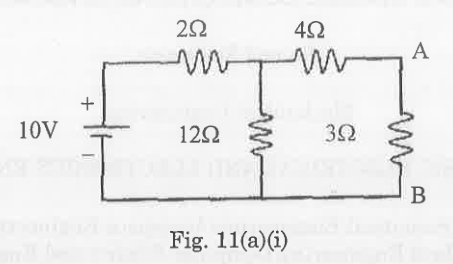
Fig. 11(a)(i) 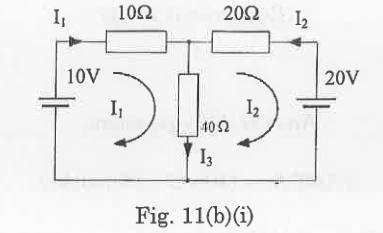
Fig. 11(b)(i) 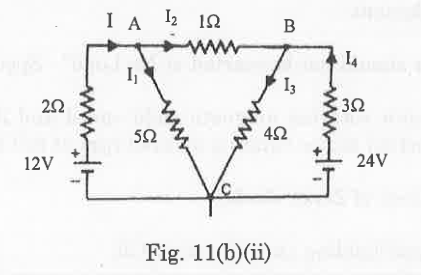
Fig. 11(b)(ii) No verified answer or solution is available for this question.
Basic Electrical and Electronics Engineering
(a) (i) Assuming necessary parameters, derive the induced EMF equation of a DC generator. (6 marks) (ii) Explain the armature resistance speed control of DC shunt motor with a diagram. (7 marks) (OR) (b) (i) A transformer has 600 turns of the primary winding and 20 turns of the secondary winding. Determine (1) the secondary voltage if the primary voltage is 140 V with the secondary open (2) the primary current if the secondary current is 90 A. (7 marks) (ii) Compare squirrel cage and slip ring induction motors in detail. (6 marks)
No verified answer or solution is available for this question.
Basic Electrical and Electronics Engineering
(a) Explain the construction, working and V-I characteristic of a PN junction diode. (OR) (b) Design a circuit to convert an AC voltage into a DC voltage with a diode full wave bridge circuit and draw the resultant rectified wave form.
No verified answer or solution is available for this question.
Basic Electrical and Electronics Engineering
(a) Explain different error detection technique and error correction codes in detail. (OR) (b) (i) Differentiate SOP and POS in digital logic. (7 marks) (ii) Minimize the expression Y = AB′C + A′B′C + A′BC + AB′C′ + A′B′C′ using K-map. (6 marks)
No verified answer or solution is available for this question.
Basic Electrical and Electronics Engineering
(a) (i) Explain the two wattmeter method of three phase power measurement with a sketch. (7 marks) (ii) Describe working of a PMMC meter and its use in measurements. (6 marks) (OR) (b) (i) Describe the functional components of DSO with a block diagram. (7 marks) (ii) Compare current transformer with potential transformers. (6 marks)
No verified answer or solution is available for this question.
Basic Electrical and Electronics Engineering
(a) Explain the working of a single phase induction type energy meter with a sketch and prove that disc revolution is proportional to energy consumption. (OR) (b) Sketch the blocks of a data acquisition system and explain its functional element and its application in various process control industries.
No verified answer or solution is available for this question.