
// Dr. A.P.J. Abdul Kalam Technical University, Uttar Pradesh / 2023
AKTU B.Tech — Fundamentals Of Electrical Engineering (BEE101), Semester 1, 2023
Fundamentals Of Electrical Engineering · BEE101 · B.Tech Computer Science and Engineering · Semester 1
Questions
22
Has an official figure
Work through the questions
22 questions
No verified answers are available for this paper.
Fundamentals of Electrical and Electronics Engineering
Unilateral & Bilateral (ii) Active & passive
No verified answer or solution is available for this question.
Fundamentals of Electrical and Electronics Engineering
Describe the following elements briefly:
No verified answer or solution is available for this question.
Fundamentals of Electrical and Electronics Engineering
- 2023
Also asked in AKTU B.Tech — Fundamentals Of Electrical Engineering (BEE201), Semester 2, 2023 (2023).
Describe briefly the different types of DC machines.
No verified answer or solution is available for this question.
Fundamentals of Electrical and Electronics Engineering
Determine the RMS value of sinusoidal current i= Im sinα in one complete cycle.
No verified answer or solution is available for this question.
Fundamentals of Electrical and Electronics Engineering
Explain briefly the SFU.
No verified answer or solution is available for this question.
Fundamentals of Electrical and Electronics Engineering
- 2023
Also asked in AKTU B.Tech — Fundamentals Of Electrical Engineering (BEE201), Semester 2, 2023 (2023).
Draw the phasor diagram of a practical two-winding transformer in no-load condition.
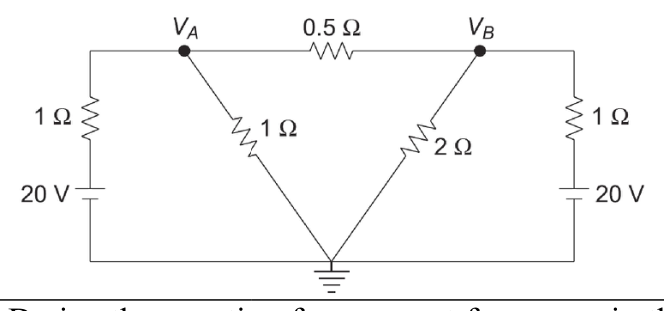
No verified answer or solution is available for this question.
Fundamentals of Electrical and Electronics Engineering
Describe briefly the following elements with examples:
No verified answer or solution is available for this question.
Fundamentals of Electrical and Electronics Engineering
- 2023
Also asked in AKTU B.Tech — Fundamentals Of Electrical Engineering (BEE201), Semester 2, 2023 (2023).
full load and 0.8 lagging pf, and (ii) half load and unity pf
No verified answer or solution is available for this question.
Fundamentals of Electrical and Electronics Engineering
Describe different
No verified answer or solution is available for this question.
Fundamentals of Electrical and Electronics Engineering
A six-pole, 2-circwave-connected armature of a DC machine has 300 conductors and runs at 1000 rpm. The emf generated on the open circuit is 400 V. Determine the useful flux per pole.
No verified answer or solution is available for this question.
Fundamentals of Electrical and Electronics Engineering
A 100 kVA, single-phase transformer has an iron loss of 600 W and a copper loss of 1.5 kW at full-load current. Calculate the efficiency at
No verified answer or solution is available for this question.
Fundamentals of Electrical and Electronics Engineering
Draw the complete equivalent circuit model of a practical transformer and explain its different parameters.
No verified answer or solution is available for this question.
Fundamentals of Electrical and Electronics Engineering
What is the real power consumed by a pure inductor? Discuss with suitable diagrams.
No verified answer or solution is available for this question.
Fundamentals of Electrical and Electronics Engineering
Draw the typical constructional diagram of a four-core armoured XLPE cable and write down the purpose of its different layers.
No verified answer or solution is available for this question.
Fundamentals of Electrical and Electronics Engineering
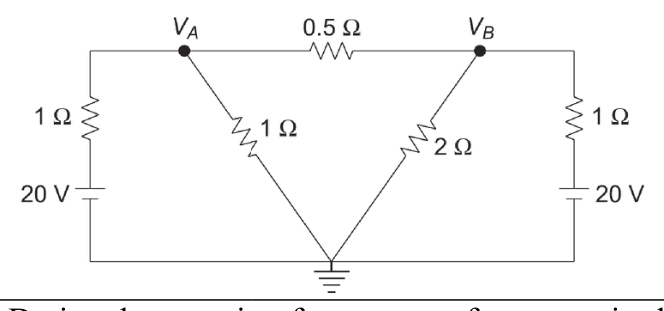
Determine the cur shown below?
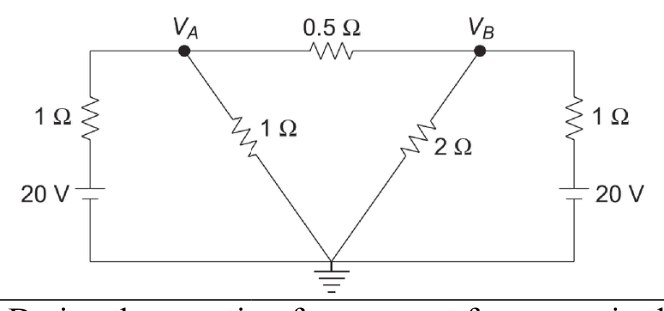
No verified answer or solution is available for this question.
Fundamentals of Electrical and Electronics Engineering
Derive the equatio and draw the phas circuit in resonant
No verified answer or solution is available for this question.
Fundamentals of Electrical and Electronics Engineering
Describe the classification of earthing based on the purpose, with the help of examples.
No verified answer or solution is available for this question.
Fundamentals of Electrical and Electronics Engineering
Derive the EMF e
No verified answer or solution is available for this question.
Fundamentals of Electrical and Electronics Engineering
Derive the mathematical relationship between phase and line quantities in a 3- phase star configuration with the help of phasor diagram?
No verified answer or solution is available for this question.
Fundamentals of Electrical and Electronics Engineering
Determine the mathematical expression for instantaneous power and average power in the case of R and L elements connected in series across a single phase AC supply of voltage t V v m sin . Also draw the instantaneous power waveform. t V v m sin
No verified answer or solution is available for this question.
Fundamentals of Electrical and Electronics Engineering
Discuss briefly th diagram. 3. fuEu esa ls fdlh ,d iz”u d
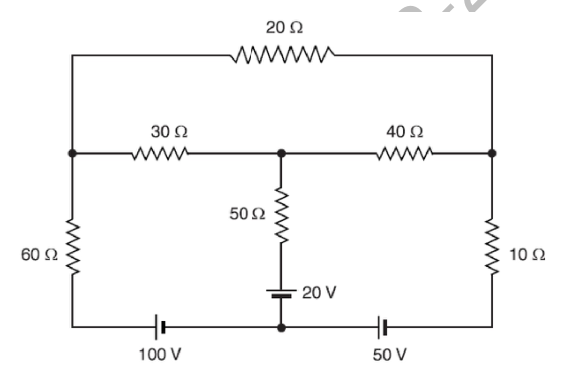
No verified answer or solution is available for this question.
Fundamentals of Electrical and Electronics Engineering
Describe the working principle and slip-torque characteristics of a three-phase Induction motor. QP23DP2_290 | 22-03-2023 08:51:31 | 117.55.242.132 QP23DP2_290 | 22-03-2023 08:51:31 | 117.55.242.132 4 | P a g e
No verified answer or solution is available for this question.